
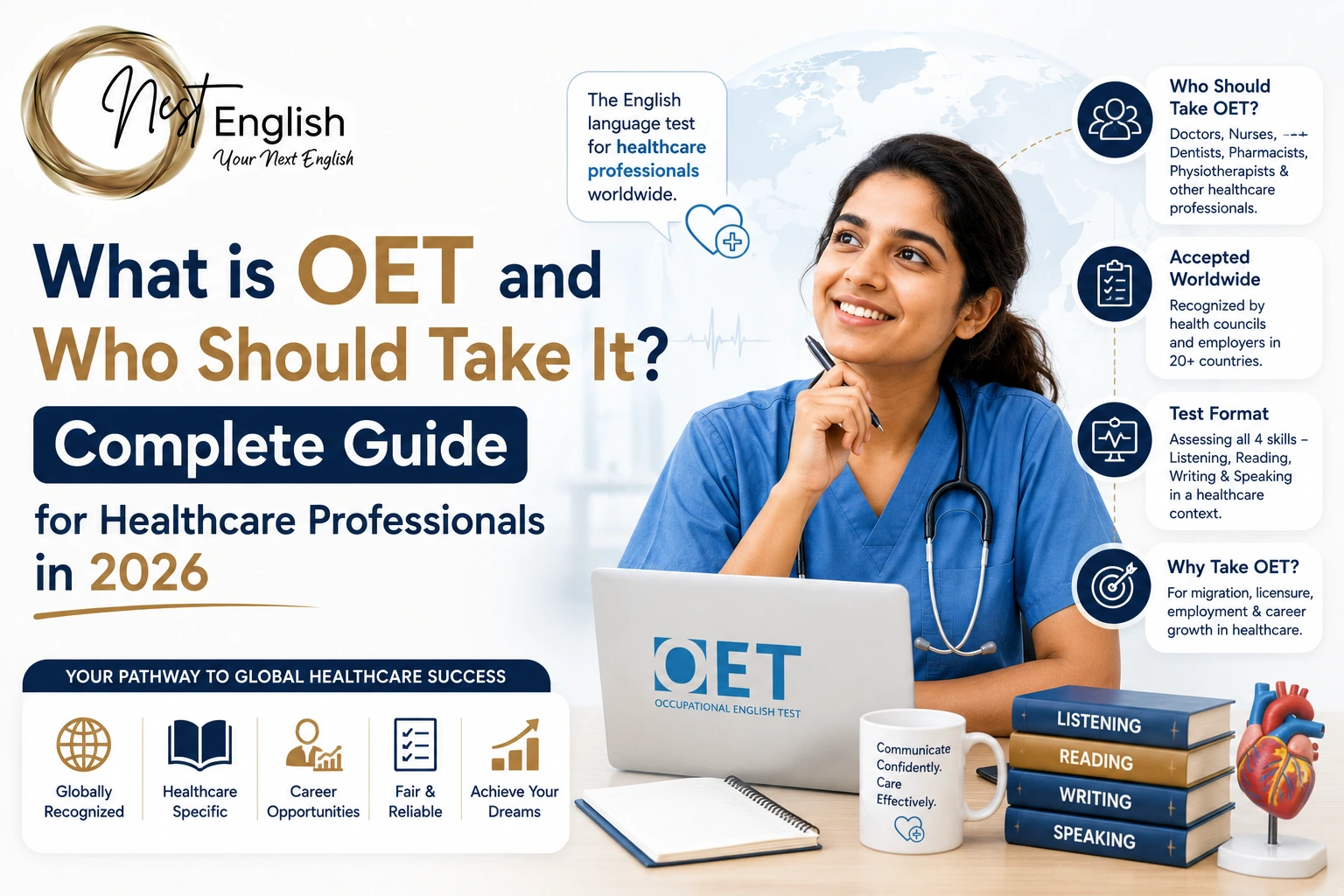

What is OET and Who Should Take It? Complete Guide for Healthcare Professionals in 2026
Introduction
The Occupational English Test (OET) is one of the world's leading English language proficiency examinations specifically designed for healthcare professionals. Unlike traditional English language tests that assess general communication skills, OET focuses on real medical and healthcare scenarios that professionals encounter in hospitals, clinics, and healthcare settings.
In 2026, OET continues to be widely recognized by healthcare regulators, employers, universities, and licensing authorities across countries such as the United Kingdom, Australia, New Zealand, Ireland, Singapore, and several other international destinations.
For doctors, nurses, pharmacists, dentists, physiotherapists, and allied healthcare professionals planning international careers, OET provides a specialized pathway to demonstrate professional English communication skills.
This comprehensive guide explains what OET is, how it works, who should take it, its benefits, exam structure, preparation strategies, and how it compares with other English proficiency examinations.
What is OET?
The Occupational English Test (OET) is an international English language examination specifically created for healthcare professionals. It assesses the ability to communicate effectively in English within clinical and healthcare environments.
| Aspect | Description |
|---|---|
| Definition | An English language proficiency test designed specifically for healthcare professionals. |
| Purpose | To evaluate English communication skills used in real medical situations. |
| Target Audience | Healthcare workers seeking international education, registration, or employment. |
The examination is designed to ensure that healthcare professionals can communicate safely and effectively with patients, colleagues, and healthcare teams in English-speaking environments.
Purpose of OET
The primary objective of OET is to assess whether healthcare professionals possess the English language skills required to perform their duties effectively in clinical settings.
Rather than focusing on everyday topics, OET evaluates communication skills within professional healthcare contexts.
| Primary Goal | Outcome |
|---|---|
| Assess healthcare communication skills. | Ensures safe and effective patient care in English-speaking environments. |
This healthcare-specific focus makes OET highly relevant for professionals planning careers abroad.
Key Focus Areas of OET
The OET assesses four essential language skills required in healthcare settings.
| Skill | Healthcare Application |
|---|---|
| Listening | Understanding consultations, instructions, and discussions. |
| Reading | Interpreting medical reports, journals, and patient information. |
| Writing | Preparing referral letters, discharge summaries, and documentation. |
| Speaking | Communicating with patients, caregivers, and healthcare teams. |
These skills reflect the communication demands healthcare professionals face daily in clinical environments.
Healthcare Professions Covered by OET
OET is available for a wide range of healthcare professions. The exam content is tailored to ensure relevance to professional practice.
| Profession | Typical Purpose |
|---|---|
| Doctors | Medical licensing and international employment. |
| Nurses | Registration and overseas healthcare jobs. |
| Pharmacists | Professional registration abroad. |
| Dentists | Clinical licensing and migration. |
| Physiotherapists | Healthcare certification and employment. |
| Allied Health Professionals | International healthcare opportunities. |
Because OET is profession-specific, candidates often find it more relevant and practical than general English proficiency exams.
Why OET is Different from Other English Tests
1. Healthcare-Focused Content
Unlike IELTS or TOEFL, OET uses medical scenarios and healthcare-related topics throughout the examination.
2. Real-Life Clinical Communication
Tasks are based on actual healthcare situations such as patient consultations, referrals, and workplace interactions.
3. Professional Vocabulary
The exam emphasizes medical terminology and workplace communication commonly used by healthcare professionals.
4. Easier for Healthcare Professionals
Because the content relates directly to their profession, many healthcare candidates find OET more comfortable and relevant than general English examinations.
Who Should Take OET?
The Occupational English Test is ideal for healthcare professionals who want to study, work, register, or migrate to English-speaking countries. Since the examination is specifically designed around healthcare communication, it provides a more practical assessment of workplace English skills than general English tests.
The following categories of healthcare professionals can benefit significantly from taking OET.
1. Doctors Planning to Work Abroad
Many international medical licensing authorities recognize OET as evidence of English language proficiency. Doctors seeking registration and employment opportunities abroad often choose OET because of its medical focus.
| Benefits for Doctors | Why OET Helps |
|---|---|
| Medical Licensing | Accepted by various healthcare regulators. |
| International Employment | Demonstrates workplace communication ability. |
| Patient Communication | Assesses practical clinical interactions. |
2. Nurses Seeking International Jobs
Nurses represent one of the largest groups of OET candidates worldwide. Many healthcare employers and nursing boards accept OET scores as part of registration and recruitment requirements.
| Career Goal | OET Advantage |
|---|---|
| Nursing Registration | Recognized by major nursing authorities. |
| Hospital Employment | Demonstrates effective patient communication skills. |
| Healthcare Migration | Supports immigration and licensing processes. |
3. Pharmacy Students and Pharmacists
Pharmacists planning international careers often require proof of English proficiency. OET provides a healthcare-specific option that aligns closely with pharmacy communication requirements.
| Professional Need | OET Benefit |
|---|---|
| Registration Abroad | Accepted by several pharmacy boards. |
| Patient Counseling | Evaluates communication in healthcare settings. |
| Career Advancement | Supports global employment opportunities. |
4. Physiotherapists and Allied Health Professionals
Many allied health professionals require English language certification before receiving professional registration abroad. OET helps demonstrate practical communication competence in healthcare environments.
| Profession | Typical Purpose |
|---|---|
| Physiotherapists | Professional licensing and migration. |
| Occupational Therapists | Registration and overseas employment. |
| Radiographers | Healthcare certification abroad. |
| Other Allied Professionals | International healthcare opportunities. |
5. Medical Students Planning Migration
Medical and healthcare students who plan to pursue international careers can benefit from taking OET early in their professional journey. Familiarity with healthcare communication standards can improve future licensing and employment prospects.
Countries That Accept OET
OET is accepted by numerous healthcare regulators, hospitals, universities, and government agencies across multiple countries. Acceptance continues to expand as healthcare systems recognize the value of profession-specific English assessment.
| Country | Primary Use |
|---|---|
| United Kingdom | Healthcare registration, NHS employment, licensing. |
| Australia | Healthcare licensing and migration pathways. |
| New Zealand | Professional registration and healthcare careers. |
| Ireland | Healthcare workforce registration. |
| Singapore | Accepted by several healthcare institutions. |
| Additional Countries | Growing recognition among healthcare authorities worldwide. |
Candidates should always verify the latest requirements directly with their chosen healthcare regulator or institution before applying.
OET Exam Structure
The OET examination evaluates four essential language skills required for effective healthcare communication.
Listening
The Listening section measures the ability to understand healthcare-related conversations, consultations, presentations, and workplace discussions.
Reading
The Reading section evaluates the ability to understand medical texts, reports, guidelines, journals, and professional healthcare documents.
Writing
The Writing section focuses on professional healthcare documentation such as referral letters, discharge summaries, transfer letters, and workplace correspondence.
Speaking
The Speaking section uses role-play scenarios that simulate real patient interactions, allowing candidates to demonstrate practical communication skills.
| Section | Focus Area |
|---|---|
| Listening | Healthcare conversations and consultations. |
| Reading | Medical texts and professional documents. |
| Writing | Referral letters and healthcare correspondence. |
| Speaking | Patient communication role-plays. |
Benefits of Taking OET
The Occupational English Test offers numerous advantages for healthcare professionals seeking international career opportunities. Because the exam focuses on real healthcare communication, it is often considered more practical and relevant than general English language examinations.
1. Career Opportunities Abroad
One of the biggest benefits of OET is its role in opening doors to international healthcare careers. Many healthcare regulators and employers recognize OET as proof of professional English proficiency.
| Benefit | Impact |
|---|---|
| International Employment | Supports healthcare job applications abroad. |
| Professional Registration | Helps meet licensing requirements. |
| Healthcare Migration | Facilitates migration pathways. |
2. Industry-Relevant English
Unlike general English tests, OET focuses exclusively on healthcare communication. Candidates are assessed using scenarios they may encounter in their professional lives.
This makes preparation more meaningful and directly applicable to clinical practice.
3. Easier for Healthcare Professionals
Many candidates find OET easier than general English tests because the topics and vocabulary are familiar. Healthcare professionals can leverage their existing medical knowledge throughout the examination.
4. Better Communication Skills
Preparing for OET helps candidates develop stronger patient communication skills, professional writing abilities, and workplace interaction techniques.
These improvements contribute to safer patient care and enhanced professional performance.
OET vs IELTS: Simple Comparison
Healthcare professionals often wonder whether they should choose OET or IELTS. The right choice depends on career goals, profession, and destination requirements.
| Feature | OET | IELTS |
|---|---|---|
| Primary Focus | Healthcare Communication | General English |
| Content Type | Medical Scenarios | Academic and Everyday Topics |
| Target Audience | Healthcare Professionals | General Applicants |
| Vocabulary Focus | Medical Terminology | General English Vocabulary |
| Best For | Healthcare Careers Abroad | Study, Work, and Migration |
Candidates should review the requirements of their chosen institution or licensing authority before deciding between OET and IELTS.
Common Mistakes OET Candidates Make
Many candidates possess strong medical knowledge but underestimate the importance of exam preparation. Avoiding common mistakes can significantly improve performance.
| Common Mistake | Impact |
|---|---|
| Ignoring Medical Vocabulary | Reduces comprehension and communication accuracy. |
| Not Practicing Role-Plays | Weakens speaking performance. |
| Insufficient Listening Practice | Affects understanding of consultations. |
| Poor Writing Structure | Leads to lower writing scores. |
| Ignoring Exam Pattern | Causes poor time management. |
How to Decide if OET is Right for You
Choosing the right English proficiency exam is an important decision. OET is ideal for professionals whose careers are directly connected to healthcare.
| Choose OET If You... | Choose IELTS If You... |
|---|---|
| Are a healthcare professional. | Need a general English qualification. |
| Want to work in the medical field abroad. | Plan to study in non-medical programs. |
| Prefer profession-specific content. | Need broader study or migration options. |
Preparation Tips for OET
Effective preparation significantly increases the likelihood of achieving the required score.
1. Learn Medical Vocabulary Daily
Build familiarity with common medical terminology, healthcare phrases, and patient communication language.
2. Practice Listening to Clinical Conversations
Listen to consultations, healthcare discussions, and medical presentations regularly.
3. Improve Writing Format Skills
Practice referral letters, discharge summaries, and professional correspondence according to OET standards.
4. Practice Speaking Role-Plays
Role-play patient interactions to improve confidence, fluency, and communication effectiveness.
5. Use Mock Tests Regularly
Full-length mock examinations help candidates become familiar with timing, question formats, and performance expectations.
Frequently Asked Questions (FAQs)
Is OET Hard?
Many healthcare professionals find OET easier than IELTS because the content is directly related to their field and professional experience.
Can Students Take OET?
Yes. Healthcare students can take OET if they are preparing for future international study, licensing, or career opportunities.
How Long is OET Valid?
OET results are generally valid for two years, although candidates should verify specific requirements with the relevant authority or institution.
Which Skill is Most Important?
All four skills are important; however, speaking and writing often receive special attention because of their direct impact on patient care and professional communication.
Final Thoughts
The Occupational English Test is a specialized English proficiency examination designed specifically for healthcare professionals who want to study, work, register, or migrate abroad. Its focus on real-world healthcare communication makes it one of the most practical and relevant language assessments available today.
In 2026, OET continues to gain global recognition among healthcare regulators, employers, universities, and licensing authorities. The exam not only assesses English proficiency but also prepares candidates for effective communication in professional healthcare environments.
For doctors, nurses, pharmacists, physiotherapists, dentists, and allied healthcare professionals, OET provides a clear pathway toward international career growth and professional success.
If your goal is to build a healthcare career abroad, obtain professional registration, or improve your clinical communication skills, OET can be one of the most valuable investments in your future.