
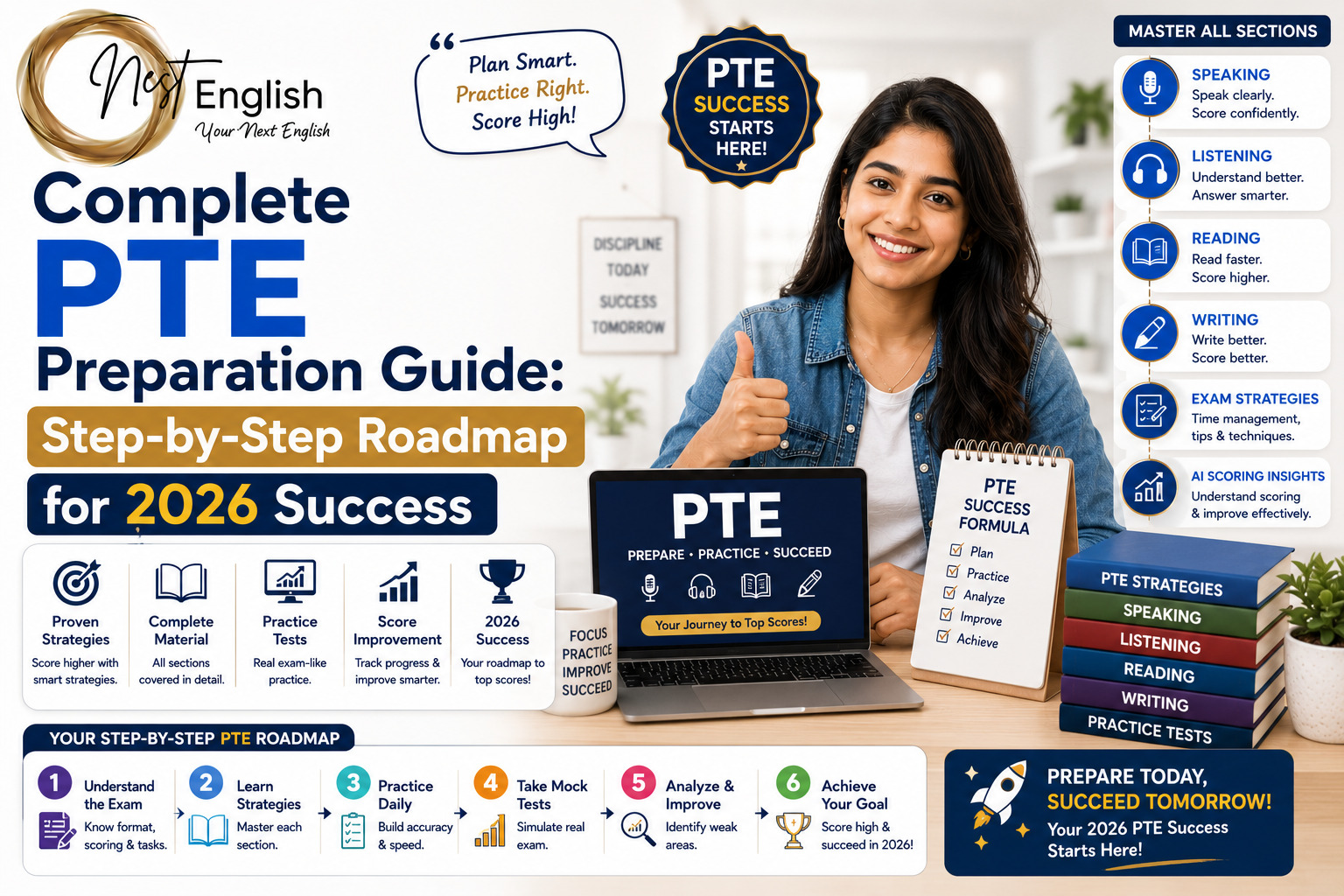

Complete PTE Preparation Guide: Step-by-Step Roadmap for 2026 Success
Introduction
The Pearson Test of English (PTE Academic) is one of the most widely accepted computer-based English proficiency examinations for students, professionals, and immigrants. It is recognized by universities, governments, and organizations across countries such as Australia, New Zealand, the United Kingdom, Canada, and the United States.
In 2026, PTE continues to grow in popularity because of its AI-powered scoring system, flexible scheduling options, quick result delivery, and fully digital testing environment. Many candidates prefer PTE because results are typically available within a few days, making it ideal for study abroad applications and immigration processes.
Achieving a high PTE score requires a structured preparation plan, consistent practice, and a clear understanding of the examination pattern. Candidates who focus on improving speaking, writing, reading, and listening skills while practicing under exam conditions often achieve excellent results.
This complete preparation guide provides a step-by-step roadmap to help you understand the exam structure, create an effective study plan, improve your performance, and maximize your chances of achieving your target score.
What is PTE Academic?
PTE Academic is a computer-based English language proficiency test developed to evaluate a candidate’s ability to communicate effectively in academic and professional environments.
The exam measures practical English communication skills and is accepted by thousands of institutions worldwide.
| Overview | Description |
|---|---|
| Test Type | Computer-based English proficiency examination |
| Purpose | Study abroad, immigration, and professional opportunities |
| Scoring Method | Artificial Intelligence-based evaluation system |
| Results | Typically available within 24–48 hours |
Skills Evaluated in PTE
PTE Academic assesses four essential English language skills.
| Skill | Purpose |
|---|---|
| Speaking | Measures fluency, pronunciation, and oral communication ability |
| Writing | Evaluates grammar, structure, and written expression |
| Reading | Tests comprehension, vocabulary, and analytical skills |
| Listening | Assesses understanding of spoken English in various contexts |
Key Feature of PTE
One of the biggest advantages of PTE is its fully AI-based scoring system. Unlike traditional examinations that may involve human evaluators, PTE uses advanced algorithms to assess performance objectively and consistently.
| Feature | Benefit |
|---|---|
| AI-Based Scoring | Fair and unbiased evaluation |
| Computer-Based Format | Modern and technology-friendly testing experience |
| Fast Results | Quick application and admission processes |
PTE Exam Format
Understanding the examination structure is the first step toward effective preparation.
Speaking & Writing (Combined Section)
The Speaking and Writing section evaluates oral communication and written expression skills through a variety of task types.
| Task Type | Purpose |
|---|---|
| Read Aloud | Measures pronunciation and fluency |
| Repeat Sentence | Tests listening and speaking ability |
| Describe Image | Assesses interpretation and speaking skills |
| Re-tell Lecture | Evaluates listening comprehension and speaking |
| Essay Writing | Measures written communication ability |
| Summarize Written Text | Tests reading and writing integration |
Reading Section
The Reading section measures comprehension skills, vocabulary understanding, and logical organization of information.
| Reading Tasks | Purpose |
|---|---|
| Multiple Choice Questions | Reading comprehension assessment |
| Re-order Paragraphs | Logical organization skills |
| Fill in the Blanks | Vocabulary and grammar evaluation |
Listening Section
The Listening section evaluates a candidate’s ability to understand spoken English in academic and real-world contexts. Success in this section depends on concentration, note-taking ability, and identifying important keywords.
| Listening Task | Purpose |
|---|---|
| Summarize Spoken Text | Evaluates listening and writing integration |
| Multiple Choice Questions | Tests listening comprehension |
| Fill in the Blanks | Measures listening accuracy and vocabulary |
| Highlight Incorrect Words | Assesses attention to detail |
| Write from Dictation | Tests listening, spelling, and memory |
Step-by-Step PTE Preparation Guide
A structured preparation plan helps candidates improve consistently while covering all sections of the examination. The following roadmap is designed to maximize performance over a 12-week preparation period.
Step 1: Understand the Exam Pattern (Week 1)
Before beginning intensive preparation, candidates should thoroughly understand the exam structure, scoring system, and task types.
Learn Task Types
Familiarity with question formats improves confidence and reduces exam-day stress.
| Focus Area | Objective |
|---|---|
| Speaking Templates | Develop structured responses |
| Writing Formats | Master essays and summaries |
| Reading Tasks | Understand question patterns |
| Listening Structure | Recognize scoring opportunities |
Set Your Target Score
A clear target score helps create a focused preparation strategy.
| Score Range | Goal Level |
|---|---|
| 50–65 | General admission requirements |
| 65–79 | High-performing candidates |
| 79+ | Advanced English proficiency |
Step 2: Build Core English Skills (Weeks 2–4)
The second phase focuses on strengthening the foundational skills required for success in every section of the exam.
Speaking Practice
| Focus Area | Benefit |
|---|---|
| Fluency | Improves speaking score |
| Pronunciation | Enhances speech clarity |
| Confidence | Supports natural delivery |
Writing Practice
| Focus Area | Purpose |
|---|---|
| Essay Structure | Improves organization |
| Grammar Accuracy | Reduces writing errors |
| Summarization Skills | Boosts integrated tasks |
Reading Practice
| Reading Skill | Benefit |
|---|---|
| Speed Reading | Improves time management |
| Vocabulary Building | Enhances comprehension |
| Grammar Understanding | Improves accuracy |
Listening Practice
| Listening Skill | Benefit |
|---|---|
| Note-Taking | Captures key information |
| Accent Familiarity | Improves understanding |
| Keyword Recognition | Increases answer accuracy |
Step 3: Improve Accuracy and Speed (Weeks 5–8)
After building core skills, candidates should focus on improving performance under exam conditions.
Timed Practice Sessions
Practice each task according to official exam timing to improve speed, confidence, and efficiency.
Focus Areas During This Phase
| Skill Area | Improvement Goal |
|---|---|
| Repeat Sentence | Increase recall accuracy |
| Writing | Improve structure and grammar |
| Reading | Enhance speed and comprehension |
| Listening | Improve concentration and accuracy |
Recommended Daily Practice Plan
| Activity | Daily Target |
|---|---|
| Speaking Practice | 1 Complete Set |
| Writing Task | 1 Assignment |
| Reading Passage | 1 Practice Exercise |
| Listening Exercise | 1 Practice Session |
Step 4: Mock Test Phase (Weeks 9–11)
Once the core skills have been developed, candidates should begin intensive mock test practice. This stage helps simulate the actual exam environment and identifies areas that require further improvement.
Full-Length Mock Tests
Practice complete PTE examinations regularly to improve stamina, concentration, and time management.
| Mock Test Activity | Recommendation |
|---|---|
| Full PTE Mock Tests | 2–3 complete tests per week |
| Performance Review | Analyze every test thoroughly |
| Error Tracking | Maintain a mistake journal |
Exam Simulation Rules
To gain maximum benefit from mock tests, candidates should follow realistic exam conditions.
- No unnecessary breaks during the test.
- Avoid distractions and interruptions.
- Use official exam timing limits.
- Practice using a headset and microphone when possible.
Analyze Performance Carefully
| Section | What to Review |
|---|---|
| Speaking | Fluency, pronunciation, confidence |
| Writing | Grammar, vocabulary, structure |
| Reading | Accuracy and speed |
| Listening | Missed keywords and concentration issues |
Step 5: Final Revision (Week 12)
The final week should focus on refining weak areas and strengthening confidence rather than learning entirely new concepts.
Focus on Weak Areas
- Repeat Sentence
- Essay Writing
- Summarize Written Text
- Write from Dictation
- Listening Accuracy
Light Practice and Revision
Avoid excessive study sessions that may cause burnout. Focus on reviewing templates, notes, vocabulary, and previous mistakes.
Confidence Building
Stay positive and trust the preparation process. Confidence plays a significant role in achieving a high PTE score.
Daily Study Plan for PTE
Weekday Study Schedule (2–3 Hours)
| Activity | Duration |
|---|---|
| Speaking Practice | 30 Minutes |
| Writing Practice | 40 Minutes |
| Reading Practice | 40 Minutes |
| Listening Practice | 40 Minutes |
Weekend Study Schedule (4–6 Hours)
| Activity | Purpose |
|---|---|
| Full Mock Test | Exam simulation |
| Mistake Analysis | Identify weaknesses |
| Speaking Recordings | Improve fluency and pronunciation |
| Writing Corrections | Strengthen grammar and structure |
Common Mistakes in PTE Preparation
| Common Mistake | Impact |
|---|---|
| Ignoring Speaking Fluency | Lower speaking scores |
| Not Practicing Repeat Sentence | Loss of valuable marks |
| Poor Time Management | Incomplete sections |
| Lack of Mock Tests | Insufficient exam readiness |
| Memorization Without Understanding | Reduced adaptability during exam |
Tips to Score High in PTE
1. Practice Daily
Consistent practice improves confidence, fluency, and overall exam performance.
2. Use Effective Templates
Well-structured templates help in essay writing, summaries, and speaking tasks.
3. Improve Pronunciation
Clear pronunciation contributes significantly to speaking scores.
4. Take Mock Tests Seriously
Treat every mock test as a real examination to build confidence and endurance.
Benefits of the PTE Exam
| Benefit | Advantage |
|---|---|
| Fast Results | Typically available within 24–48 hours |
| Flexible Test Dates | Convenient scheduling options |
| AI-Based Scoring | Fair and objective assessment |
| Global Acceptance | Recognized worldwide |
| Digital Experience | Suitable for technology-savvy candidates |
Frequently Asked Questions (FAQs)
Is PTE Easier Than IELTS?
Difficulty depends on individual strengths. Many candidates prefer PTE because of its structured format and computer-based evaluation.
How Long Does It Take to Prepare for PTE?
Most candidates require approximately 4–8 weeks of focused preparation, although beginners may need additional time.
What Is the Hardest Part of PTE?
Repeat Sentence and Write from Dictation are often considered the most challenging tasks because they require strong listening and memory skills.
Can I Get a High Score on My First Attempt?
Yes. Candidates who follow a structured preparation plan, practice consistently, and take regular mock tests can achieve excellent scores on their first attempt.
Final Thoughts
The Pearson Test of English (PTE Academic) is one of the most efficient and widely accepted English proficiency examinations for study abroad, immigration, and professional advancement. Its AI-powered scoring system, quick result delivery, and flexible scheduling make it a preferred choice for candidates worldwide.
Achieving a high score requires more than simply understanding English. Success comes from a combination of structured preparation, daily practice, strategic time management, and regular performance analysis.
Candidates who follow a disciplined study plan, strengthen all four language skills, and consistently practice under exam conditions can significantly improve their chances of reaching their target score.
Remember, success in PTE is built on three pillars: speed, accuracy, and consistency. Stay focused, trust the process, and approach your examination with confidence.